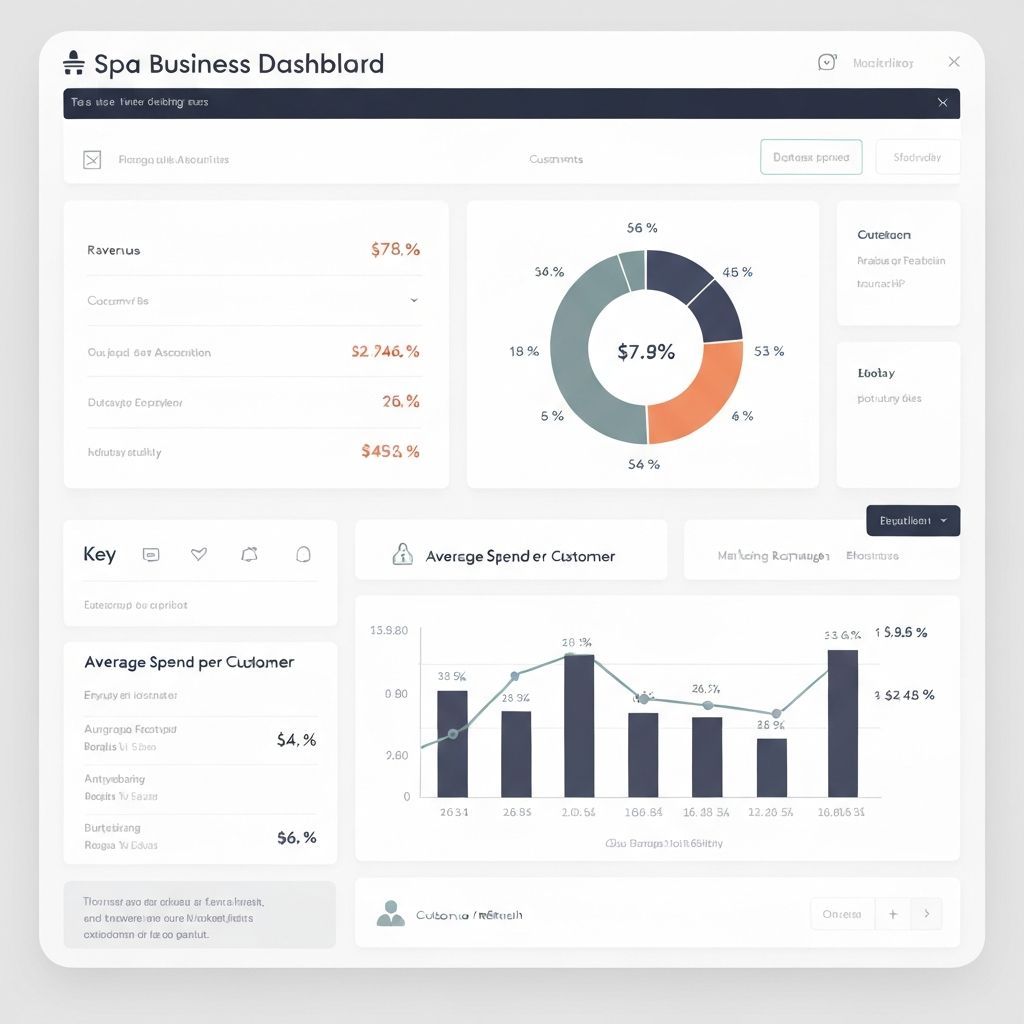
The Foundation of Spa Business Success
Running a successful spa requires more than creating a relaxing environment and providing quality treatments. The spa industry is competitive, client expectations are evolving, and the businesses that thrive are the ones that understand their numbers and manage operations with structure and intention. Many spa owners enter the industry motivated by passion for wellness, beauty, healing, hospitality, or personal care. Passion is valuable, yet long-term business success requires discipline and strategic oversight. Operational metrics are the core tool that allows a spa owner to understand performance, identify opportunities for improvement, and make informed decisions that increase profitability and long-term value. Tracking metrics is not about micromanaging staff or turning the spa into a rigid corporate environment. It is about clarity. When a business knows exactly where it is performing well and where efficiency can be improved, the owner gains control over outcomes rather than reacting to circumstances. The purpose of this guide is to explain the key operational metrics that every spa owner should monitor. These metrics reveal client behavior patterns, financial performance, staff productivity, and the overall health of the business. Once understood and consistently tracked, these metrics help a spa grow sustainably, improve client experience, increase profit margins, and increase the eventual valuation of the business if the owner ever decides to sell.
Client Retention and Loyalty Metrics
Client Retention Rate
Client retention rate is one of the most critical metrics in the spa industry. Spas are relationship-driven businesses. The success of a spa depends on clients returning consistently, not just visiting once. Retention reflects the quality of service, the effectiveness of communication, and the consistency of client experience. To calculate retention, compare the number of clients who returned within a specific period to the number of new clients who visited during that same period. High retention signals trust and satisfaction. Low retention indicates issues that must be addressed. A spa with strong retention requires less marketing spend to maintain revenue. It also creates predictable income, which improves financial stability. A spa that consistently retains clients also builds a stronger brand reputation in its local market and is more resilient against competition.
Average Revenue Per Client
Average revenue per client is another essential metric. This number shows how effectively the spa converts each client visit into revenue through treatment selection, product recommendations, and service upgrades. Increasing average revenue per client does not mean hard selling. It means ensuring that clients receive services appropriate for their needs and that the spa provides complete care rather than single-service transactions. When staff understand how to consult and recommend thoughtfully, clients feel cared for and value increases naturally. A spa that improves average revenue per client can increase total revenue significantly without increasing client volume or adding new staff. This metric is closely connected to training, service menu design, and pricing strategy.
Operational Efficiency Metrics
Treatment Room Utilization Rate
Treatment room utilization rate is a powerful operational efficiency metric. Spa physical space is one of the most valuable assets. If treatment rooms sit empty for large portions of the day, revenue potential is wasted. To calculate utilization, measure how many hours rooms are available and compare that to the number of hours rooms are actively in use. Low utilization often indicates scheduling inefficiencies, imbalanced staffing, or service menu gaps. Improving utilization may involve schedule restructuring, revising appointment durations, introducing faster-turn services during peak times, or adjusting staff coverage. High utilization increases revenue capacity without increasing fixed costs, which meaningfully improves profit margin.
Staff Productivity
Staff productivity is another core metric. The most effective way to measure productivity is revenue generated per service provider, adjusted for hours worked. This reveals which team members are consistently booked and producing revenue and which may need additional training or marketing support. Productivity is influenced by skill level, client relationship quality, communication ability, and personal presence. High performing staff should be recognized and supported to prevent burnout. Lower performing staff may require mentoring, service refinement, or targeted skill development. Tracking productivity also informs staffing decisions, compensation strategies, and growth planning. When a spa balances staffing to match demand and supports continuous professional development, it operates more smoothly and profitably.
Revenue and Financial Metrics
Membership and Recurring Revenue
Membership or recurring service participation is an increasingly important metric. Recurring revenue stabilizes the business and reduces seasonal volatility. Spas that implement monthly facial programs, injectable treatment cycles, massage or body therapy memberships, or skincare replenishment subscription plans build predictable and dependable revenue. The higher the percentage of clients enrolled in recurring programs, the more resilient the spa becomes. Membership participation rate also enhances client retention because clients who feel invested in their wellness journey are less likely to leave. Increasing recurring participation requires clear service structure, confident consultation, and consistent follow up systems.
Retail Product Attachment Rate
Retail product attachment rate is another metric that shapes revenue growth. Effective product recommendation is not upselling. It is continuation of care. Clients who use proper home care products support the results of their treatments, return more consistently for follow up services, and value the professional expertise of the spa. A spa with a low retail product attachment rate may be missing opportunities to strengthen client relationships and revenue streams. Training staff in educational product consultation, rather than sales language, helps increase this metric. Clear product displays, simple packaging of routines, staff familiarity with ingredients and benefits, and consistent follow up support also improve attachment rates. Product sales can represent a meaningful portion of revenue and profit margin because retail often carries higher margin than services.
Labor Cost Ratio
Labor cost ratio is one of the most financially significant metrics in spa operations. Labor is often the largest expense in a service-based business. To calculate labor cost ratio, divide total labor costs by total revenue. A healthy labor ratio depends on the spa model, treatment types, and staffing structure. If labor costs consume too much of revenue, profit margins shrink quickly. High labor costs may indicate overstaffing, inconsistent scheduling, imbalance between full-time and part-time coverage, inefficient service duration, or compensation design that does not align with performance. Properly managed labor cost ratio allows the spa to sustain growth, maintain fair compensation, and ensure long-term financial stability.
Occupancy Cost Ratio
Occupancy cost ratio is also important. This metric measures rent or mortgage costs as a percentage of revenue. If occupancy cost is too high relative to revenue, growth will feel consistently constrained. A spa with high occupancy cost requires either higher average revenue per client, higher client volume, or increased recurring service participation to maintain profitability. Understanding occupancy cost ratio informs decisions about expansion, relocation, lease negotiation, and capacity planning.
Client Experience and Scheduling Metrics
Appointment Prebooking Percentage
Appointment prebooking percentage measures the percentage of clients who schedule their next appointment before leaving the spa. High prebooking creates predictable schedules, increases retention, and reduces marketing pressure. Low prebooking suggests clients may not be fully committed to their service plan or that staff may need to improve consultation and closeout communication. Encouraging prebooking is not about pressure. It is about supporting client wellness goals and ensuring continuity of care. A spa that consistently maintains high prebooking percentages operates with greater stability and efficiency.
No-Show and Cancellation Rate
No-show and cancellation rate is another key metric. High cancellation rates disrupt scheduling, reduce revenue, and increase workload for front desk and administrative staff. No-show management requires clear policies, communication, reminder systems, and sometimes deposit structures. Reducing cancellation rates improves revenue predictability and allows staff and resources to be used more effectively.
Marketing and Growth Metrics
Marketing efficiency metrics such as cost per new client and new client conversion rate are essential for understanding growth effectiveness. Many spas invest heavily in marketing but do not track how well those investments convert into long-term clients. Tracking these numbers clarifies which marketing channels are producing meaningful results and which are wasting resources. Spa marketing should support long-term relationship building, not just generate one-time visits.
High-Level Financial Performance
Financial performance metrics such as total revenue, gross margin, net profit margin, and free cash flow provide a high-level view of financial health. Net profit margin indicates how much income the spa retains after covering all expenses. Free cash flow indicates how much cash the business generates that can be used for reinvestment or owner compensation. A spa may appear busy yet generate little profit if pricing, labor structure, or expense controls are inefficient. Understanding these numbers helps the owner make informed decisions about pricing adjustments, cost management, and service mix.
The Value of Consistent Tracking
Tracking operational metrics requires discipline, yet it pays dividends. When a spa consistently monitors and responds to key performance indicators, decision-making becomes clearer and outcomes improve. Revenue increases become more predictable. Client satisfaction strengthens. Staff culture becomes more stable. Profit margins grow. Most importantly, the business becomes more valuable. If the owner ever decides to sell, buyers will look closely at these operational metrics to determine the spa's stability, efficiency, and scalability. Strong metrics increase valuation and negotiating leverage.
Get Professional Support
If you are a spa owner and you want clarity on your operational performance and how it affects your business value, we offer confidential advisory support. Contact us to schedule a private review of your metrics, learn how your spa compares to industry benchmarks, and identify the most impactful opportunities for improvement. Building a stronger business starts with understanding the numbers that drive it. Reach out today to begin a focused and strategic improvement process designed to strengthen your spa and support your goals.